Common questions about clean energy
Do you have questions about clean energy, like solar or energy storage? Our FAQs are designed to give you an overview of some of the common questions we answer during project development.
Don’t see an answer you’re looking for here? Contact us at info@encore.eco.
Solar Questions
It depends on a number a state-specific factors, but generally speaking you need at least 25 acres.
Each solar project is fenced in with a 6 foot agricultural style fencing, but the surrounding area can still be used for farming and other agricultural uses. In some cases, Encore can bring additional value to your land via contacts with sheep farming entities engaged around solar farms, pollinator-friendly habitats, apiaries, etc.
Take a quick look around the property. Does it have good southern exposure? Are there hillsides or trees to the south, east, or west that may shade the project? In certain locations, this can be a good resource for evaluating the solar potential of a property, but don’t worry if it is confusing, we would be happy to have a look via Google Earth.
The owner of the solar project will pay all taxes due on the solar. The landowner will continue to pay all property taxes due on the land.
No. As the owner of the solar project, Encore will be responsible for all activities pertaining to, or that occur as a result of the project.
Project development time can vary due to a number of factors but development generally takes 12-24 months and construction takes about 3-6 months depending on the size of the project.
This depends on your specific situation and goals as land purchases are a good option if you have no future use for the land, and want to have cash immediately. Land leases are also a good option if you would like to preserve the land for future generations while receiving a steady form of income.
Minimal to none. Solar projects present no harm to wildlife. We’ve spotted birds, hawks, deer, bears and other species all in and around our projects over the years. Project fencing can be designed to allow smaller wildlife to enter the array, while keeping larger potentially harmful animals out. Any site specific concerns would be addressed and mitigated in the permitting process for the area.
It’s important to know if your land is a special agricultural district for property tax subsidization. In most states that we operate in, solar development in these districts can cause a change in property taxes, so consider this before entering into an agreement.
Solar energy converts solar radiation (light) into energy. Every location on Earth receives some sunlight over a year, the amount of solar radiation that reaches any one spot on the Earth’s surface varies. Solar energy and specifically solar photovoltaics (solar PV) captures this radiation and turn it into useful forms of energy.
Solar PV utilizes solar panels. When the sun shines onto a solar panel, energy from the sunlight is absorbed by the PV cells in the panel. This energy creates electrical charges that move in response to an internal electrical field in the cell, causing electricity to flow.
Other types of solar technologies include solar heating & cooling (SHC), and concentrating solar power (CSP).
Here’s an animated step by step graphic from Save on Energy:

Community-scale solar is a solar project providing electricity for commercial or community consumption. These types of projects can vary in size and location but differ from residential solar which typically powers a single home.
Some examples of community-scale solar projects can be found here.
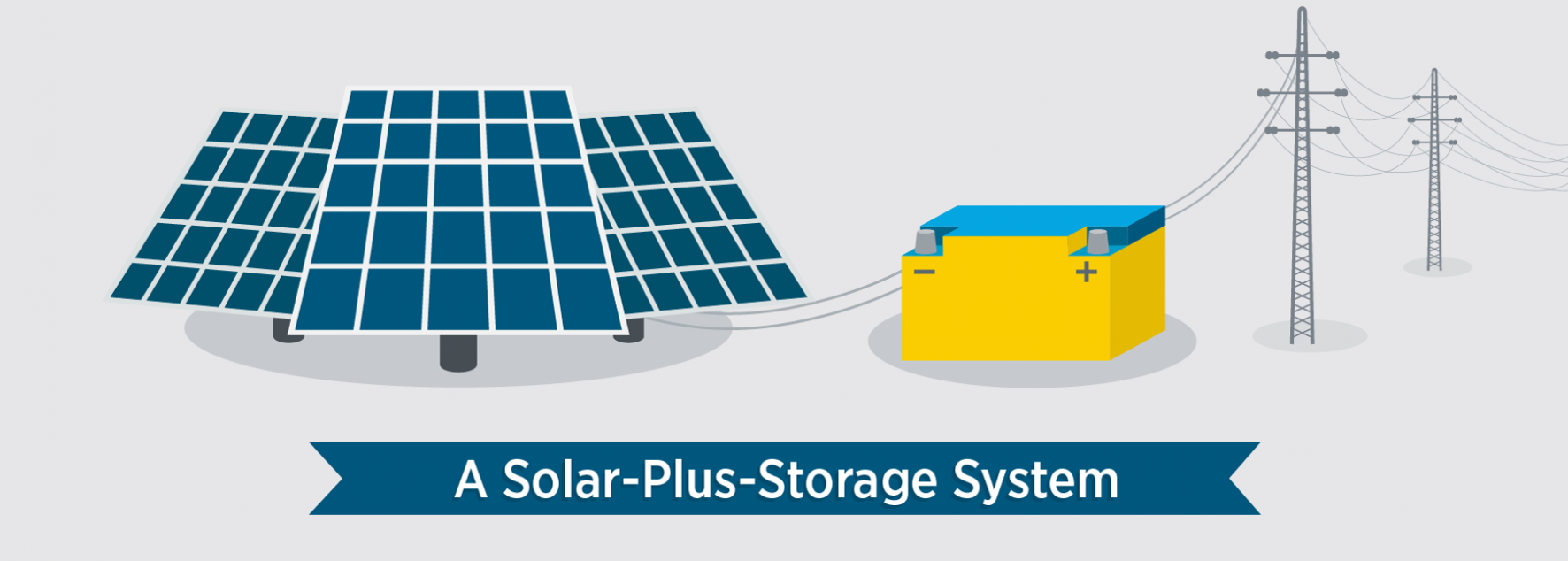
Technologies that leverage solar energy to produce electricity are an affordable and reliable source of electricity. However, electricity production is limited to when the sun is shining. There continues to be a growing trend across the solar industry to develop solar plus storage systems in order to use the energy generated by the solar panels either when the sun is not shining (at night) or when the power goes out from a natural disaster, weather event, or other disruption.
A solar plus storage system is a battery system that is charged by a connected solar system, such as a photovoltaic (PV) one.
There a few ways to make money off of a solar project.
If you are generating electricity from solar for your home or business, you may be able to reduce your annual electricity bills.
Depending on state and federal tax incentives, you may also be able to save money through tax credits.
Lastly, depending on how electric utilities are regulated in your state and state policies, it may be possible to sell the energy produced from your panels back to your power provider via net metering.
Net metering allows utility customers who generate their own solar electricity to feed some of the energy that they do not use back to the grid. This billing method credits solar customers against their electricity consumption, lowering their monthly bills. Depending on how much solar energy is produced and local policies, the benefits of net metering can vary for solar customers in different parts of the country.
More information on net metering.
Yes, Solar energy can still generate energy when it is cloudy, rainy, or snowy, even at night.
As long as there is sunlight outside your solar panels will generate energy, even in small amounts. During the night the sunlight reflected by the moon can even generate small amounts of energy.
Project development time can vary due to a number of factors but development generally takes 12-24 months and construction takes about 3-6 months depending on the size of the project.
Proper operations and maintenance of a solar project can deliver a multitude of benefits to your energy system including increasing efficiency and energy output and decreasing system downtime.
Solar panels benefit from the following:
- Real-time tracking of system performance
- Verification of energy production
- Physical plant inspections
- Mechanical and electrical inspections
- Management of operations and maintenance personnel
- Site maintenance and landscaping
- Optimization of environmental attributes associated with clean energy projects
- Coordination of project insurance policies
A recent study by Zillow found that solar panels increase a home’s value by 4.1%.
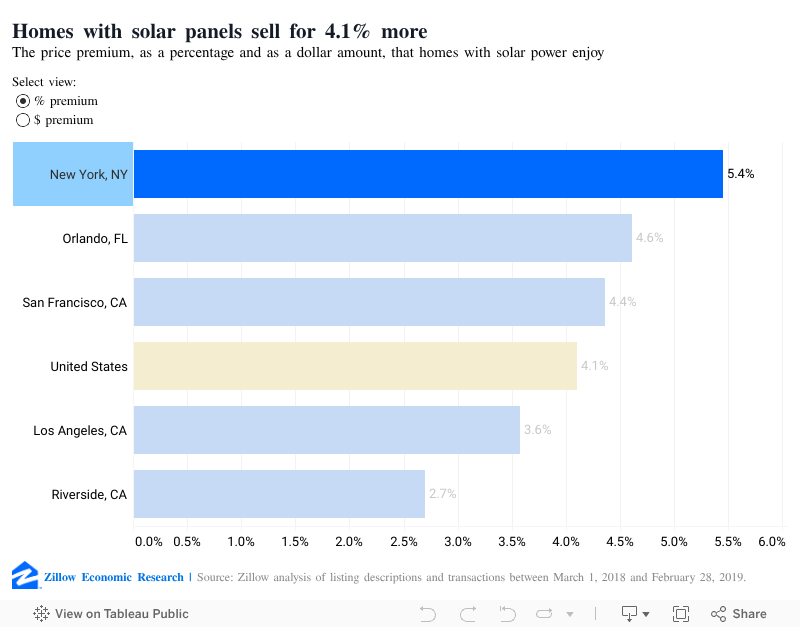
Several studies have been conducted related to the impacts of ground-mounted solar projects across the United States. Examining property value in states across the United States has found that large-scale solar arrays often have no measurable impact on the value of adjacent properties, and in some cases may even have positive effects.
Read the factsheet on property values and solar from the Solar Energy Industries Association.
Solar power, like any energy resource, has environmental impacts. Generating electricity from solar comes with a significant reduction in greenhouse gas emission, as well as other air pollution. Both solar PV and concentrating solar power have a much smaller life-cycle carbon footprint than conventional power generation.
A growing trend in solar development includes converting unproductive farmland to solar as well as utilizing Brownfields for community-scale projects. Community solar projects are also increasingly implementing pollinator-friendly habitats. Pollinators are critical to the health of our future food supply and already threatened by widespread insecticide and herbicide use in addition to habitat loss from climate change and land development activities. Pollinator-friendly solar sites support healthy pollinator populations with a diverse mix of native grasses and flowering plants.



 The team at Encore Renewable Energy® is proud to be certified as a B Corp, joining over 3,500 other businesses worldwide who also share a commitment to social and environmental performance, accountability and transparency.